
General
In our Meet the Team series, we highlight the people behind iQx PLANS who are driving digitalisation in well construction through development of cloud-native collaborative software.
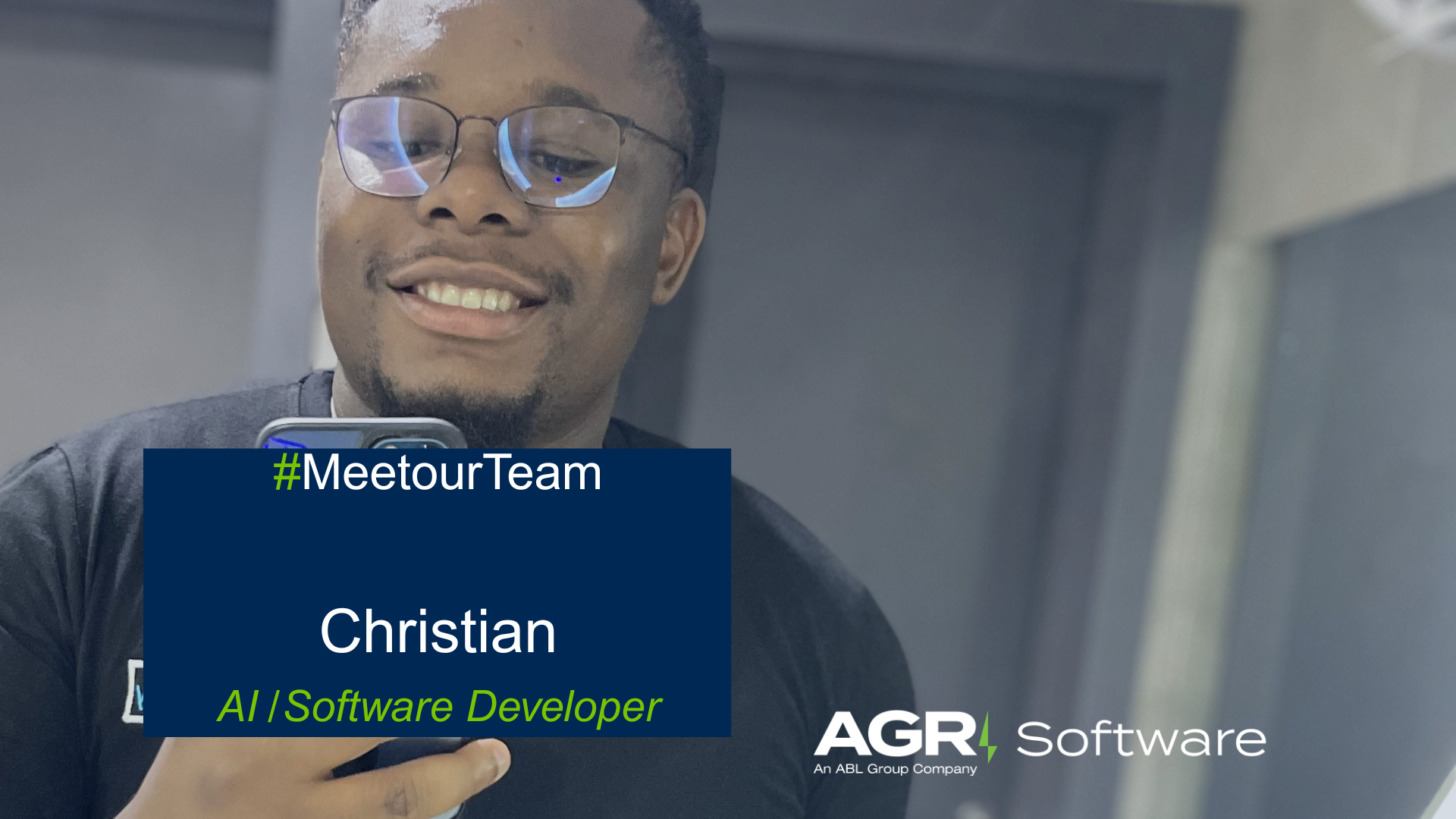
We sat down with Christian Sada and spoke with him about how AI-powered well planning and intelligent software systems are transforming the way well operations are executed.
Give us a glimpse into your day-to-day life at AGR Software. What keeps you on your toes?
My day-to-day work revolves around building and improving our iQx PLANS time and cost management software solutions for digital well planning and forecasting.
Much of what I do sits at the intersection of AI, backend systems, and real-world problem-solving. A key focus is designing software that can structure and interpret risk and uncertainty data, making it more accessible and useful in AFE decision-making processes.
What keeps me on my toes is the constant balance between technical depth and usability. It’s not just about building powerful systems. It’s about ensuring they are scalable, user-friendly, and deliver real value in digital well programs and planning environments.
What drew you to software development and what keeps you passionate about it?
What drew me to software development was the ability to turn ideas into systems that solve meaningful problems.
With a background in mathematics, AI, and data science, I’ve always been motivated by complexity - taking unstructured challenges and turning them into structured, functional solutions. In the context of well operations, that means enabling better workflows and smarter risk modelling.
What keeps me passionate is that software is never just about code. It’s about enabling people to work smarter, especially in complex industries where the right tools can significantly reduce well risk and well cost while improving collaboration.
Can you tell us about something exciting you are working on right now?
One of the most exciting areas I’m working on is developing intelligent tools that make complex project data easier to interpret, structure, and use in risk and cost modelling.
In well planning software, this means improving how data is used across teams, increasing visibility, reducing friction in technical workflows, and supporting more accurate forecasting and scenario analysis.
What excites me most is the combination of AI and software engineering to create practical tools that help teams make better decisions with less complexity.
Based on your experience, how do you think AI will influence high-value project planning?
AI is already having a significant impact on high-value project planning, and this is especially true in digitalisation in well construction.
It enables teams to process complexity faster and with greater confidence, supporting better forecasting, earlier risk identification, and more dynamic scenario analysis. These capabilities are critical in helping operators reduce well risk and well cost.
Importantly, I see AI not as a replacement for human expertise, but as a decision-support layer. It enhances how engineers and cost planners work, allowing them to focus on higher-value decisions while the technology handles data-heavy processes.
Beyond the work, what’s your favourite part about working in infrastructure and well planning?
What I find most meaningful is knowing that the work contributes to something larger.
Whether it’s through digital well programs or broader infrastructure development, the impact extends beyond the technical layer. These projects play a key role in economic development, long-term planning, and how industries evolve over time.
Being able to contribute to this through digitalisation and advanced well planning software makes the work both challenging and rewarding.
Book a demo to see how our AI-ready iQx PLANS software can improve decision-making and reduce well risk and cost.