
General
In our “Meet the Team” series, we spotlight the people behind AGR Software who are revolutionizing well planning and construction through cutting-edge technology and deep industry expertise.
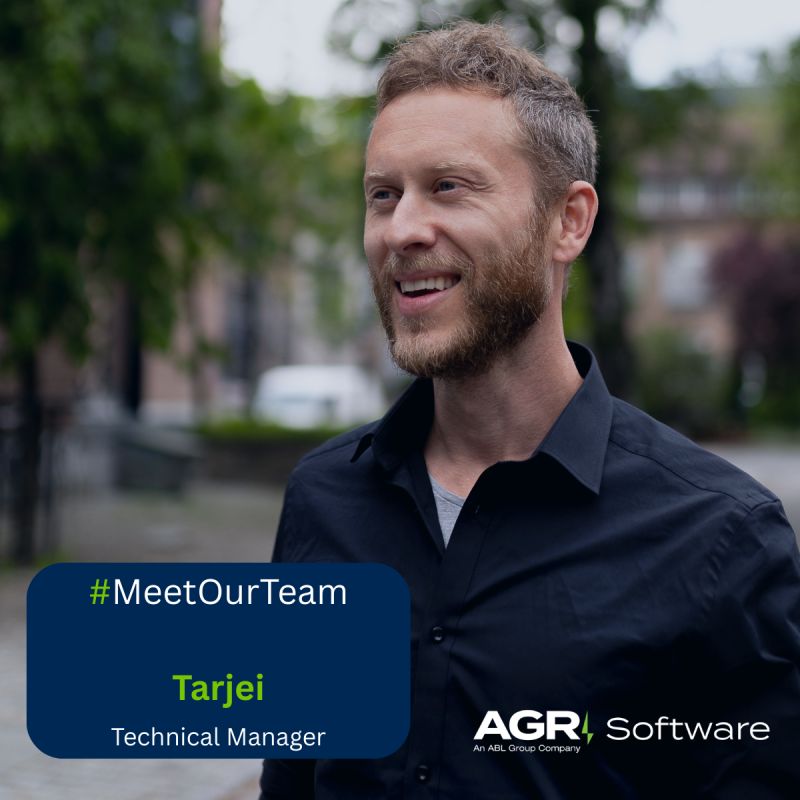
Today, we speak with our Technical Manager about his daily work, the evolution of digitalisation, and how digital well planning and collaborative workflows are transforming the industry—helping operators reduce well risk and well cost while enabling smarter decision-making.
Give us a glimpse into your day-to-day life at AGR Software. What keeps you on your toes?
I usually start my day by asking two simple but essential questions:
Where are we? How are our deliveries progressing? What’s happening with clients today? And how has the world, especially technology, shifted since yesterday?
Where are we going? Given that direction, which ideas are becoming obsolete, and where are new opportunities emerging?
Our daily standups with the backend team are the real starting point of the day - when everything aligns and priorities become clear. It’s where strategy meets execution.
What drew you to this industry, and what keeps you passionate about it?
Discovering computers on a summer day in 1987 was a defining moment for me. I was fascinated that these powerful machines had already existed for years without fundamentally changing how most people thought or worked — which motivated me to explore their potential.
Since then, the transformation has been extraordinary. From early leaders like Microsoft and Oracle, to Google redefining access to information, to today’s cloud and AI ecosystems - technology has become the backbone of nearly every industry.
I’ve always felt I was in the information business. Now, with digitalisation in well construction and digital well programs, the entire energy sector is too.
Can you tell us about something exciting you are working on right now?
Right now, I’m working on algorithms that translate probabilistic uncertainty into deterministic scenarios — essentially helping clients make clearer, more confident decisions.
In the context of well planning software, this means enabling better forecasting, optimization, and risk evaluation — directly contributing to reducing well risk and well cost.
What makes it particularly interesting is how these challenges sometimes mirror concepts from physics — where uncertainty, observation, and modelling intersect. It’s always rewarding when a practical engineering problem opens the door to deeper insights.
How do you see the future of digital well delivery, and why does it matter?
We’re at a turning point. AI, especially large language models, is reshaping how we interact with technology.
If the internet democratized information, AI is amplifying that shift. But it also increases the challenge of filtering signal from noise.
In digital well planning, we already see user expectations evolving. Instead of navigating multiple systems, users want intuitive, conversational access to data and workflows. That’s why we’re moving toward more agent-friendly and collaborative well planning environments.
This shift is key to revolutionizing well planning and construction — making tools more accessible, workflows more integrated, and decisions more data-driven.
At the same time, success will depend on owning and leveraging unique data. Platforms that provide differentiated insights, especially within digital well program management, will be the ones that stand out.
And frankly, this may only be the beginning. The next wave of innovation may come from directions we don’t yet fully anticipate.
Beyond the work, what’s your favourite part about being part of AGR Software?
Without a doubt, it’s my colleagues, and occasionally seeing their talents applied to something completely unrelated to software.
If you could change one thing about the energy industry, what would it be and why?
You could call me a dreamer, but I still believe in commercially viable fusion.
It’s exciting to see advanced AI techniques now being applied to fusion reactor design. If we can solve energy at that scale, the impact would be transformative — not just for production, but for sustainability and global distribution challenges as well.